June 5, 1981
U.S. Centers for Disease Control and Prevention (CDC) reports first cases of rare pneumonia in young gay men, later determined to be AIDS.
July 3, 1981
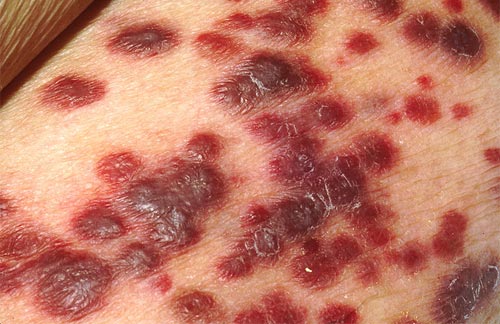
CDC issues report on highly unusual occurrence of rare skin cancer, Kaposi's sarcoma, among young gay men. The cancer, although known to exist on its own, became associated with AIDS.
Kaposi's sarcoma on the skin of an AIDS patient
(National Cancer Institute)
Jan. 1, 1982
Gay Men's Health Crisis, the first community-based AIDS service provider in the U.S., is established in New York.
Sept. 24, 1982
CDC formally establishes the term acquired immune deficiency syndrome (AIDS) and refers to four "identified risk factors" of male homosexuality, intravenous drug abuse, Haitian origin and hemophilia A.
March 4, 1983
The U.S. Public Health Service issues recommendations for preventing HIV transmission through sexual contact and blood transfusions. The FDA leads an effort to exclude sexually active homosexual and bisexual males from donating blood, but the American Red Cross and the American Assn. of Blood Banks initially refuse to ask donors about sexual orientation.
May 19, 1983
Study links AIDS to heterosexual contact
April 24, 1984
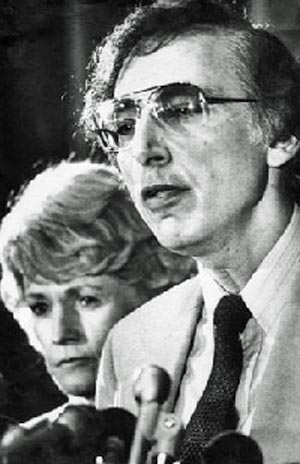
Dr. Robert Gallo of the National Cancer Institute identifies Human Immunodeficiency Virus (HIV) as the cause of AIDS.
(Lana Harris / Associated Press)
July 16, 1984
Activists participate in a gay rights march with signs such as "We Demand Massive Federal Funding to End the A.I.D.S. Epidemic" in San Francisco near the 1984 Democratic National Convention.
( Jose Galvez / Los Angeles Times)
Aug. 1, 1985
Ryan White, 13, is barred from his Indiana school after contracting AIDS from hemophilia treatments. He went on to speak out publicly against AIDS stigma and discrimination. He died in 1990. Read Ryan White's obituary .
Ryan White in 1988.
(Associated Press)
Aug. 13, 1985
American Red Cross says it sets aside blood donations from male homosexuals strictly for research.
Oct. 2, 1985
Longtime Hollywood star Rock Hudson dies at 59 after fighting AIDS.
Rock Hudson in 1961.
(Santa Barbara Museum of Art)
Feb. 4, 1987
Entertainer Liberace dies of AIDS.
March 20, 1987
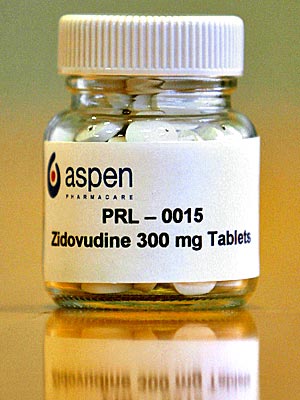
FDA approves the experimental drug AZT for marketing in the United States, making it the first drug licensed in the U.S. to treat AIDS.
A sample bottle of Zidovudine.
(John McConnico / Associated Press)
April 1, 1987
Following criticism about federal funding to fight the disease, President Reagan defends his administration's efforts and advises abstinence and monogamous relationships to prevent the spread of AIDS.
( Dennis Cook / Associated Press)
Oct. 15, 1987
U.S. Congress adopts Helms Amendment banning use of federal funds for AIDS education materials that "promote or encourage, directly or indirectly, homosexual activities." .
Dec. 1, 1988
World AIDS Day first declared by World Health Organization (WHO) on Dec. 1.
Jan. 1, 1991
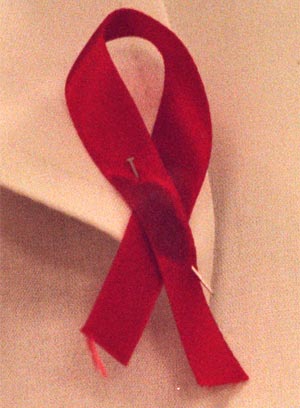
The red ribbon is introduced as the international symbol of AIDS awareness at the Tony Awards.
( Alan Hagman / Los Angeles Times)
Nov. 7, 1991
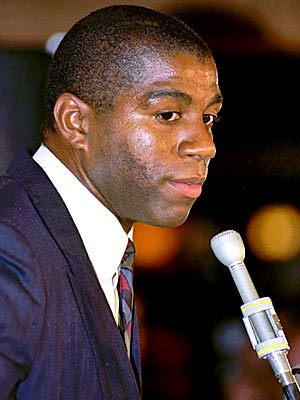
NBA legend Earvin "Magic" Johnson announces that he is HIV-positive and retires from basketball.
( Associated Press)
Jan. 1, 1992
AIDS becomes the No. 1 cause of death for U.S. men ages 25 to 44.
Jan. 1, 1993
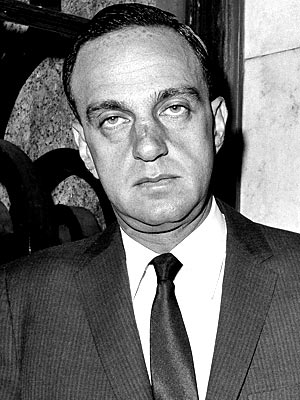
Part One of "Angels in America," Tony Kushner's play about AIDS, wins the Tony Award and Pulitzer Prize.
Roy M. Cohn was a portrayed in the play.
(Associated Press)
Jan. 1, 1993
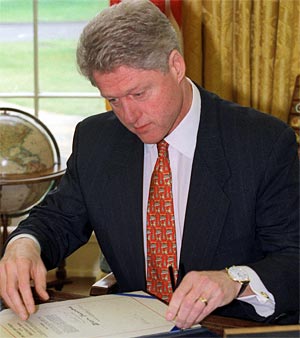
President Clinton signs HIV immigration exclusion policy into law.
( Wilfredo Lee / Associated Press)
Jan. 1, 1994
Pedro Zamora, a young gay man living with HIV, appears on the cast of MTV's popular show, "The Real World"; he dies later this year at age 22.
( Associated Press)
Feb. 17, 1994
Randy Shilts, an award-winning journalist who became the nation's foremost chronicler of gay life and the AIDS epidemic, dies at 42.
March 21, 1994
"Philadelphia," one of the first mainstream Hollywood films to acknowledge HIV/AIDS, homosexuality and homophobia, wins two Oscars.
( Ken Regan / TriStar Pictures)
Dec. 23, 1994
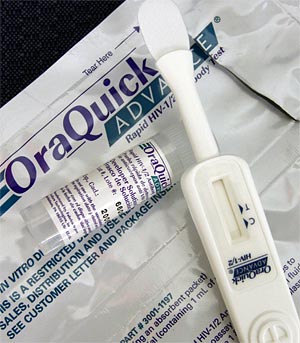
FDA approves an oral HIV test, the first non-blood based antibody test for HIV.
An oral fluid rapid HIV test
(Tina Fineberg / Associated Press)
Jan. 1, 1997
AIDS-related deaths in the U.S. decline by more than 40% compared with the prior year, largely due to highly active antiretroviral therapy.
July 1, 2000
13th International AIDS Conference is held in South Africa. It is the first time the gathering is held in a region ravaged by the disease.
Nov. 7, 2002
Health and Human Services Secretary Tommy G. Thompson announces approval of a rapid HIV test. The test provides results in about 20 minutes instead of the two days to two weeks required with standard HIV tests.
Jan. 4, 2010
U.S. ends travel and immigration ban for those with HIV.
May 13, 2011
Anti-HIV drugs prove highly effective in preventing transmission of the virus. "Prevention can be a reality," a U.N. expert says.
( Los Angeles Times)